

Search Website
Watch and listen: Composition faculty member Omar Daniel's "Game of Couples" album featuring four Estonian Runo-songs
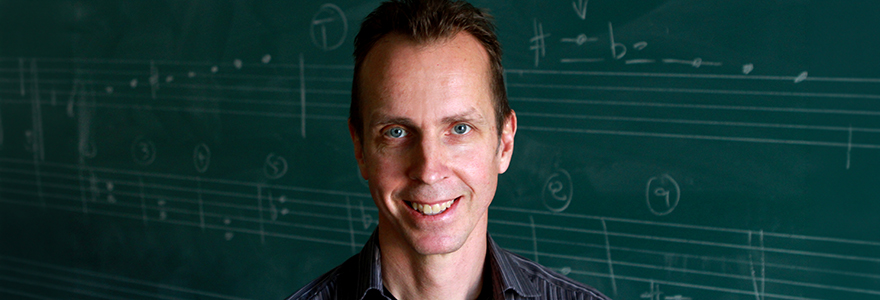
via Don Wright Faculty of Music
Composer and faculty member Omar Daniel released his latest album earlier this year. Featuring both chamber music and song, it is titled Game of Couples and features performances from a number of musicians who inspired the album's works, including Western faculty members Tom Wiebe, cello, and Sharon Wei, viola.
Daniel says of the recording: “The term chamber music is so flexible, so agile, that it adapts quickly to the prevailing aesthetic, and is at the forefront of innovation. But chamber music also carries the importance of history with it. The compositions presented here are works of contemporary expression, but also show reverence for the great works of the past. Chamber music as a social event is a theme throughout, and Game of Couples is not only the title of one of the compositions, but is applicable to all four pieces: chamber music as a form of social music-drama.”
Like many of Daniel’s previous works, two of the works on the recording have a connection to the music and culture of ancient Estonia and the unique folk songs that remain a part of Estonian life.
Daniel's background on Four Estonian Runo songs is as follows, and he's shared video performances of the pieces as well as a mini-documentary for additional context:
"The Estonian language is spoken by barely two million people. It is a Finno-Ugric language, and its origins are the ancient (and nearly extinct) Karelian, Livonian and Ingrian languages and, due to its Uralic origins, is directly related to the Sámi language spoken by Indigenous peoples of what is now Norway, Finland and Western Russia. Additionally, because of Estonia’s geographical location and size, it has been under occupation or threat of occupation for centuries. So, Estonian is a rare language, and I find myself in a unique position, having Estonian heritage and speaking the language, to assist in both its preservation and advancement through artistic means.
"Four Estonian Runo-songs grew from my ongoing interest in ancient Estonian folk music (Runo-songs, or Regilauld in Estonian). These folk songs are characterized by a very direct, repetitive style of unaccompanied singing (solo or in small groups). Melodies for entire songs may have no more than four notes and two rhythmic values. These songs were almost always sung by women and depict village life: harvest activities, weddings, funerals, games, cooking, the natural world, and songs for children.
"In my collection, the herding song is an imitation of the vocal call to the scattered herd (bring the herd over here!). One can imagine the cooking song (thicken cream!) used to pass the time in the kitchen, the melody being thrown back and forth daughter to mother, mother to grandmother. The game song (horse game) was sung and ‘performed’ with actions by children and adults alike, often in an antiphonal manner of singing. And, a lullaby (sleep, come to the brow) completes the set with the most universal of songs that a mother sings to a child. The four texts assembled here use several regional dialects, and there is considerable poetic sophistication in the texts: alliteration, symmetries, word-play, onomatopoeic passages. My relationship with Estonian traditional music is similar to Bartok’s relationship to his folk material: often referential, but assimilated into an original musical language. It is a modern dialect of the old language, occasionally to the point where the old is indiscernible. That was my goal: the integration of Estonian musical tropes into my style.
"It was a great pleasure to have Erika Raum, violin, and Emma Heaton, voice, perform these works for this video project. The videos are real performances: ‘live off the stage’, and have a very special immediate and engaging quality. Toronto’s Riddle films, specialists in music-on-film, brought their expertise to the project. I am grateful to The Western Research Knowledge Mobilization Grant for financial support."
Video 1
Performances by Emma Heaton, voice and Erika Raum, violin
Video 2
Documentary featuring Omar Daniel, composer, and performers Emma Heaton, voice and Erika Raum, violin