

Search Website
Doctor of Musical Arts in Performance (DMA)
Doctor of Musical Arts in Performance (DMA)
Doctor of Musical Arts in Performance (DMA)
Combine artistic excellence with scholary research
The Doctor of Musical Arts (DMA) is a doctoral degree in music performance with areas of concentration in voice, piano (solo and collaborative), violin, viola, cello, clarinet, trumpet, saxophone, trombone, and choral conducting.
The program is available in two different streams: project-based (Stream 1) and thesis-based (Stream 2). At the end of Year 1, with the approval of their DMA Advisory Committee, students indicate their intention to pursue Stream 1 or Stream 2.
Admissions
Application Deadline
December 1
Admission Requirements
- A Master's degree in Music Performance or its equivalent
- Minimum 70% average in the Master's
- A successful audition and interview
Application Materials
In the online application, you will be prompted to upload the following supplementary materials:
- A statement of interest (one page)
- A recent academic paper (approximately 3,000 words) that demonstrates the ability to carry out music research.
- A current resume or CV
- A pre-screening audition video
- A repertoire list and copies of recital programs
- Optional: additional writing samples (e.g., published articles, reviews, CD notes, etc.)
- Transcripts - Upload a transcript from each university or college program you've attended.
- Three academic references - Provide their names and email addresses and a unique link will be emailed to each referee to submit an online reference or upload a reference letter.
- Proof of English language proficiency (if applicable)
-
Applicants whose first language is not English must provide evidence of their proficiency in English through satisfactory achievement on an accepted language test within the past two years:
- The Test of English as a Foreign Language (TOEFL) iBT (internet-Based Test): For tests taken before January 21, 2026, Western requires a minimum overall score of 86, with no individual section score below 20. For tests taken on or after January 21, 2026, Western requires a minimum overall score of 4.5, with no individual section score below 4. Western’s TOEFL ID is 0984.
- International English Language Testing Service Academic (IELTS Academic). The minimum acceptable score is 6.5 out of 9.
- The Duolingo English Test. Applicants must attain a minimum score of 115.
- For the full list of acceptabel proficiency tests, please see the SGPS website.
-
In their words
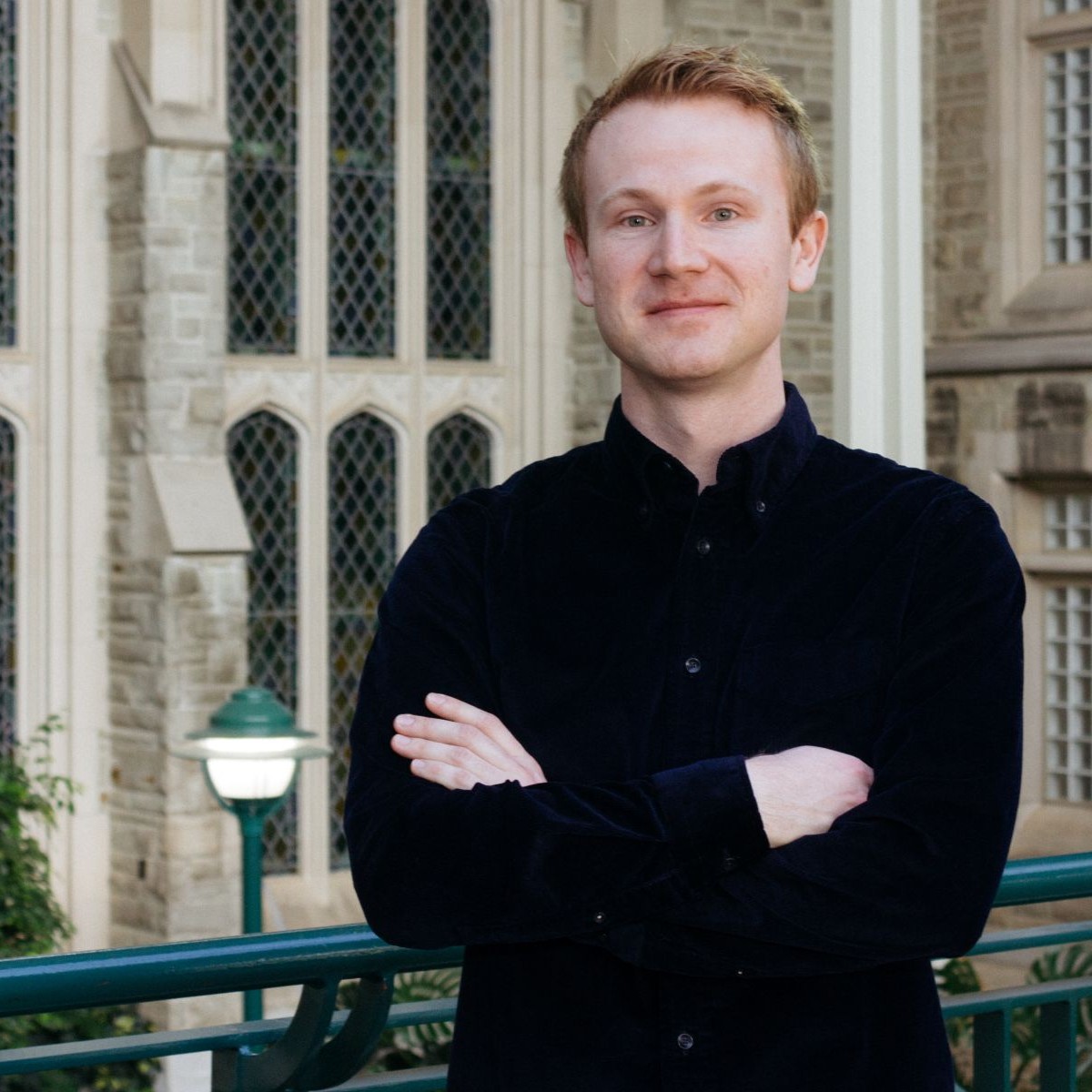
Connor O'Kane, DMA (Solo Piano), 2023
Learning how to thrive as a music professional
Program Requirements
Stream 1 (Project-Based)
Duration: 4 years (12 terms)
8.0 credits:
Studio lessons for 4 years (Music 9801-9808)
5 courses in support of performance
3 non-performance courses
Check timetable for courses offered this year.
To support success in graduate studies, all incoming graduate students are required to complete the School of Graduate and Postdoctoral Studies (SGPS) Academic Integrity Module in order to progress beyond the first term of their degree. Eligible students can access the module in the Graduate Student Web Services Portal.
Students who do not complete the module will not be able to progress beyond the first term of their degree.
New doctoral students in Music are required to complete the TCPS 2: CORE-2022 (Course on Research Ethics) in their first term.
The Tri-Council Policy Statement: Ethical Conduct for Research Involving Humans (TCPS 2) is a joint policy of Canada’s three federal research agencies: CIHR, NSERC, and SSHRC.
This policy is a Canadian guideline for the ethical conduct of research involving human participants. TCPS 2: CORE-2022 is an online, self-paced tutorial featuring interactive exercises and examples from each of the three agencies that help to familiarize researchers with the TCPS 2 guidelines. The course consists of nine modules and a knowledge consolidation exercise.
The examination provides students an opportunity to demonstrate breadth of knowledge in their field and readiness to write a DMA research paper.
Written over a 2-week period in summer (term 6), the exam consists of two tasks set by the student's DMA advisory committee and approved by the Associate Dean (Graduate Studies).
The student’s advisory committee reviews the papers and the possible outcomes are:
- Pass
- Pass conditional on revisions within a given time period
- Fail (the student is invited to repeat the exercise or to withdraw from the program).
Terms of reference for the qualifying examination (pdf)
Four performance events are required, on average one per year. The performance events may include solo recitals, chamber music recitals, opera roles (only one, normally), and lecture recitals, as well as concerto performances. Students should discuss with their studio instructor and their DMA Advisory Committee their plans for performance events well in advance.
Students in Stream 1 will have an external juror assigned to either their 3rd or 4th performance event. This juror's report will be shared with the student and studio instructor.
DMA Performance Event approval form (doc)
The DMA research paper is the written component of the Research-Creation Portfolio for Stream 1 DMA students. The first step is the creation of a research paper proposal. Supervised by a project director, the DMA student will draft a proposal by term 7 (Fall of Year 3).
The proposal should include a tentative title, the name of the director and second reader, a description of 1000–1250 words (4–5 pages) outlining the main argument, scope, goals, and significance of the topic, as well as a working bibliography.
DMA Research Paper Proposal cover page template (pdf)
Writing a Proposal - Slides from January 2024 presentation (pdf)
The DMA research paper is a scholarly or professionally oriented investigation into a topic of significance to music performance, reflecting the student’s research interests. It may be focused on repertoire, pedagogy, or professional practice individually or in combination.
The DMA research paper will generally result in a paper of 40–50 pages (approximately 10,000-12,250 words, double-spaced, exclusive of bibliography) or a research project of equivalent scope. It will demonstrate the highest scholarly standards of quality and excellence.
There is no formal defense of the DMA research paper.
Timeline
Stream 1 (Project-Based)
| Year 1 | Year 2 | Year 3 | Year 4 |
|---|---|---|---|
|
Studio lessons (9801, 9802) |
Studio lessons (9803, 9804) |
Studio lessons (9805, 9806) |
Studio lessons (9807, 9808) |
|
2-3 courses in support of performance |
2-3 courses in support of performance (complete all performance courses by end of term 5) |
|
|
|
Non-performance course |
Non-performance course |
Non-performance course (complete all non-performance courses by end of year 3) | |
|
Performance Event 1 |
Performance Event 2 |
Performance Event 3 | Performance Event 4 |
|
Academic Integrity Module Research Ethics Tutorial TCPS-2 CORE |
Potential project director & second reader identified. Qualifying Examination (Term 6) |
MRP proposal: by term 7 student drafts proposal for project director's review. By term 8 the proposal should be approved by director, second reader, and Graduate Committee
|
Writing of MRP Submission of final version of MRP
|
Program Requirements
Stream 2 (Monograph-Based)
Duration: 4 years (12 terms)
7.0 credits:
Studio lessons for 3 years (Music 9801-9806)
5 courses in support of performance
3 non-performance courses
Check timetable for courses offered this year.
To support success in graduate studies, all incoming graduate students are required to complete the School of Graduate and Postdoctoral Studies (SGPS) Academic Integrity Module in order to progress beyond the first term of their degree. Eligible students can access the module in the Graduate Student Web Services Portal.
Students who do not complete the module will not be able to progress beyond the first term of their degree.
New doctoral students in Music are required to complete the TCPS 2: CORE-2022 (Course on Research Ethics) in their first term.
The Tri-Council Policy Statement: Ethical Conduct for Research Involving Humans (TCPS 2) is a joint policy of Canada’s three federal research agencies: CIHR, NSERC, and SSHRC.
This policy is a Canadian guideline for the ethical conduct of research involving human participants. TCPS 2: CORE-2022 is an online, self-paced tutorial featuring interactive exercises and examples from each of the three agencies that help to familiarize researchers with the TCPS 2 guidelines. The course consists of nine modules and a knowledge consolidation exercise.
The examination provides students an opportunity to demonstrate breadth of knowledge in their field and readiness to write a DMA monograph.
Written over a 2-week period in summer (term 6), the exam consists of two tasks set by the student's DMA advisory committee and approved by the Associate Dean (Graduate Studies).
The student’s advisory committee reviews the papers and the possible outcomes are:
- Pass
- Pass conditional on revisions within a given time period
- Fail (the student is invited to repeat the exercise or to withdraw from the program).
Terms of reference for the qualifying examination (pdf)
Three performance events are required. The performance events may include solo recitals, chamber music recitals, opera roles (only one, normally), and lecture recitals, as well as concerto performances. Students should discuss with their studio instructor and their DMA Advisory Committee their plans for performance events well in advance.
DMA Performance Event approval form (doc)
The proposal defense brings together the members of the student’s advisory committee, plus the supervisor and second reader if either or both are not already members of the committee. All in attendance should receive a copy of the proposal in advance. At the defense, all in attendance may pose questions or comments to the student and determine that the proposal meets expectations.
Following the proposal defense, the student submits a final version of the proposal to the office of the Associate Dean (Graduate Studies) for approval by the Graduate Committee. This marks the completion of this milestone.
Guidelines for writing a monograph proposal (pdf)
DMA Monograph Proposal cover page template (pdf)
Writing a Proposal - Slides from January 2024 presentation (pdf)
The length of a DMA monograph is normally approximately 80 - 120 pages. In addition to the elements of a doctoral thesis required by SGPS, DMA monographs should include a preface that briefly explains how the candidate came to the topic of the monograph. DMA monographs should also include an appendix with the programs for the candidate’s three performance events included.
All procedures and formatting found in the School of Graduate & Postdoctoral Studies' (SGPS) Thesis Regulation Guide must be followed in the preparation of a monograph.
Please note the deadlines set by SGPS for dissertation submission and scheduling of the defense.
All DMA Stream 2 candidates must present a public lecture (approx. 45 minutes) which is usually on the same day just before the defense.
Timeline
Stream 2 (Thesis-Based)
| Year 1 | Year 2 | Year 3 | Year 4 |
|---|---|---|---|
|
Studio lessons (9801, 9802) |
Studio lessons (9803, 9804) |
Studio lessons (9805, 9806) |
No studio lessons
|
|
2-3 courses in support of performance |
2-3 courses in support of performance (complete all performance courses by end of term 5) |
|
|
|
Non-performance course |
Non-performance course |
Non-performance course (complete all non-performance courses by end of year 3) | |
|
Performance Event 1 |
Performance Event 2 |
Performance Event 3 | |
|
Academic Integrity Module Research Ethics Tutorial TCPS-2 CORE |
Potential supervisor & second reader identified. Qualifying Examination (Term 6) |
Monograph proposal: by term 7 student drafts proposal for supervisor's review. Monograph proposal defense
|
Writing of monograph Public lecture Monograph defense
|
Questions? Contact us!
For more information, please contact:
Graduate Program Assistant
Audrey Yardley-Jones
Office: TC 216
Phone: 519-661-2111, x85354
Email: ayardley@uwo.ca
Associate Dean (Graduate Studies)
Kevin Mooney
Office: TC 215
Email: kmooney@uwo.ca
Ready to Apply?